


Breast Augmentation with Fat Transfer: Natural Volume Without Implants
The decision to undergo an aesthetic change of the breasts is now made by many women who desire a harmonious and natural-looking result. While breast implants were considered the standard solution for decades, an increasing number of patients are becoming interested in breast augmentation with fat transfer. This method uses the body’s own fatty tissue, which is harvested from other areas and transplanted into the breasts. The procedure combines two treatment goals: the targeted reduction of fat deposits in unwanted areas and the enhancement of breast volume. For women seeking moderate enlargement while valuing a natural look and feel, this method can be a suitable option. However, breast augmentation with fat transfer requires precise technique and realistic expectations regarding the achievable outcome.
The Desire for Change with a Natural Result
Many women feel that their breast shape or volume does not align with their body image. This desire for change is individual and can have various reasons. Some patients wish for more fullness, others want to correct asymmetries or restore volume after pregnancy and breastfeeding. What many of these women share is the desire for a result that appears authentic and harmonious.
Why Many Patients Deliberately Choose to Avoid Implants
The decision against breast implants is often driven by the wish to avoid foreign materials in the body. Several considerations play a role:
- Avoiding permanent foreign objects in the body
- The desire for a soft, natural breast feel
- Concerns about an artificial or exaggerated appearance
- A preference for the body’s own tissue over silicone implants
In addition, breast augmentation with fat transfer does not require implants to be replaced or monitored long-term. This method particularly appeals to patients who prefer a subtle change and would also like to benefit from body contouring in other areas.
Naturalness as the Central Aesthetic Goal
For many patients, achieving a natural appearance is the primary objective. The breasts should not look oversized but instead be proportional to the rest of the body. Breast augmentation with fat transfer allows for subtle shaping that integrates harmoniously into the overall silhouette. The transplanted fat tissue feels soft and moves similarly to natural breast tissue. These characteristics contribute to an authentic result that, for the patient herself, is often barely distinguishable from her natural breast.
What Makes Breast Augmentation with Fat Transfer Unique
This procedure differs fundamentally from augmentation with implants. Instead of inserting a solid silicone device, the patient’s own fatty tissue is used, harvested from other regions beforehand. The method combines two procedures in one treatment and utilizes the body’s own potential for aesthetic enhancement.
Volume Enhancement Using the Body’s Own Tissue
Breast augmentation with fat transfer involves several carefully coordinated phases:
- Fat tissue is harvested through gentle liposuction from suitable body areas
- The extracted material is specially processed and purified of unwanted components
- The injection is performed in multiple layers of the breast to ensure even distribution
- The transplanted tissue develops new blood vessels and integrates at the new site
The goal is for as much of the transferred fat as possible to remain permanently and integrate naturally into the breast structure.
Fat Harvesting from Suitable Body Areas
The selection of donor sites depends on the patient’s individual body shape and personal preferences. Typical areas for fat harvesting include the abdomen and waist, thighs and hips, buttocks and lower back, as well as knees and upper arms. The fat is removed gently in order to preserve the integrity of the fat cells as much as possible. The higher the quality of the harvested fatty tissue, the greater the likelihood that it will permanently integrate after transplantation.
Combination of Body Contouring and Breast Enhancement
A particular advantage of breast augmentation with fat transfer lies in its dual aesthetic effect. While the breasts gain volume, unwanted fat deposits in other areas of the body are reduced at the same time. This combination enables a harmonious overall appearance and can naturally improve body proportions. Patients appreciate this dual benefit, as they can achieve two aesthetic improvements within a single procedure.
How the Transplanted Fat Works
After being injected into the breast, the transplanted fat tissue must form new blood vessels in order to survive permanently. This process is known as angiogenesis and is crucial for the long-term success of the treatment.
In the first weeks after the procedure, the body breaks down a portion of the transferred fat cells, while others successfully integrate. The survival rate of the fat depends on several factors:
- Technique used for fat harvesting and processing
- Gentle injection in small quantities
- Even distribution in multiple tissue layers
- The patient’s individual blood supply
- Avoidance of pressure and trauma during the healing phase
Experience shows that approximately 60 to 80 percent of the injected fat tissue integrates permanently. The remainder is broken down by the body and eliminated through metabolism.
Technique and Experience as Decisive Factors
The quality of the result largely depends on surgical technique. Precise planning, careful handling of the fat cells, and even distribution within the breast tissue are essential prerequisites for a satisfying outcome. Experienced surgeons take individual anatomy into account and adapt the injection technique to the specific characteristics of each patient. Breast augmentation with fat transfer is not a standardized procedure but requires a high level of expertise and aesthetic understanding.
Who May Be Suitable for Breast Augmentation with Fat Transfer
Not every woman is an ideal candidate for this procedure. Certain physical requirements and realistic expectations are necessary to achieve a satisfactory result. A thorough medical examination and detailed consultation help assess individual possibilities. Both anatomical conditions and the patient’s personal wishes are taken into consideration.
Requirements Regarding Body Type and Skin Quality
A fundamental requirement for breast augmentation with fat transfer is the presence of sufficient fat reserves in other areas of the body. Very slim patients with a low body fat percentage may not have enough donor tissue available. In addition, skin quality plays an important role. The skin of the breast should be elastic enough to accommodate the additional volume without causing unwanted stretching or irregularities. The initial condition of the breast is also relevant. In cases of significant excess skin or pronounced asymmetries, breast augmentation with fat transfer alone may not achieve the desired result.
Realistic Expectations Regarding Volume Increase and Shape
The achievable enlargement with this method is limited. Patients should consider the following aspects:
- An increase of one to two cup sizes per treatment is typically realistic
- A portion of the transplanted fat will be reabsorbed by the body
- A second treatment may be advisable to achieve the desired volume
- Dramatic transformations are not possible with this method
Breast augmentation with fat transfer is particularly suitable for women seeking a moderate increase in volume while placing strong emphasis on a natural-looking result.
Aesthetic Possibilities and Limitations
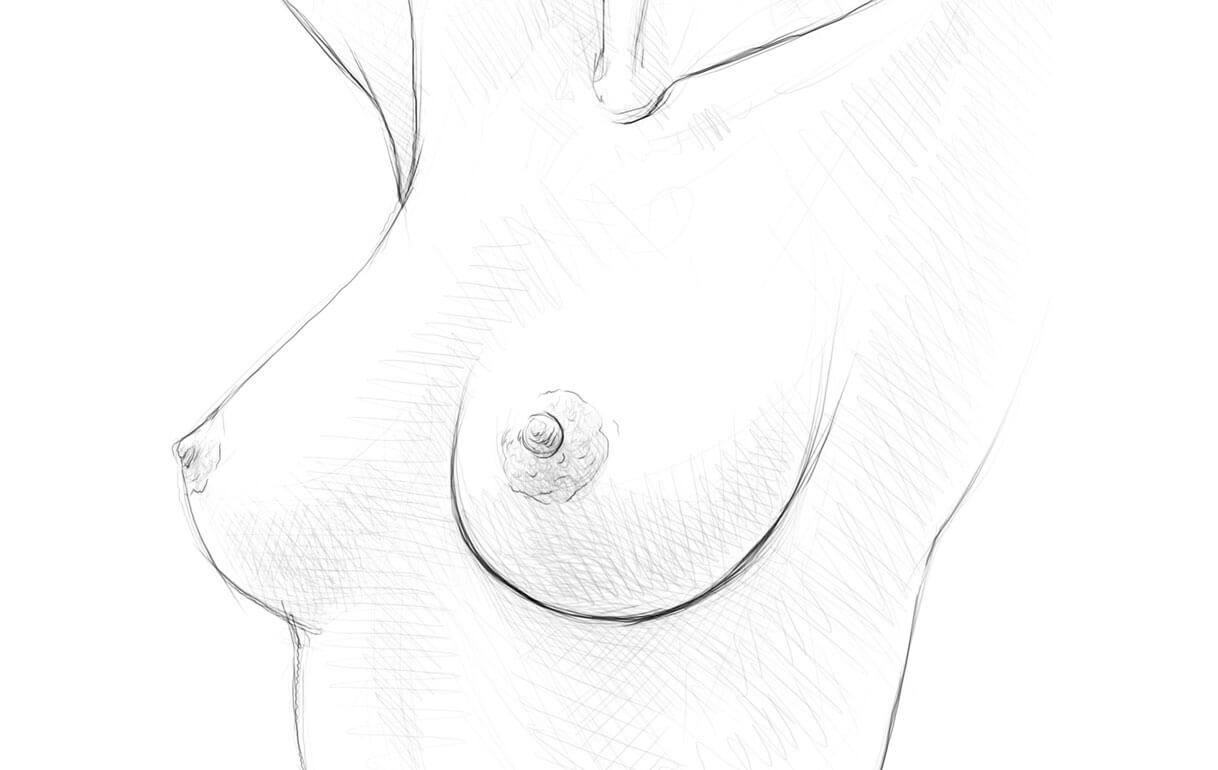
This method offers specific advantages but also comes with certain limitations. A clear understanding of these aspects helps in making an informed decision. While some patients hope for a significant transformation, breast augmentation with fat transfer is primarily designed for subtle to moderate results. Individual goals should therefore be discussed in detail beforehand in order to avoid disappointment.
Moderate Enlargement Rather Than Dramatic Volume Increase
Compared to breast implants, breast augmentation with fat transfer does not allow for dramatic transformation. The method is designed for gentle volume enhancement. Per procedure, approximately 200 to 400 milliliters of fat per breast can be transplanted, depending on the individual starting situation. This amount is sufficient for a visible yet natural enlargement. Those seeking a much more pronounced change should consider alternative methods or plan a combination of multiple treatments.
Improvement of Shape, Softness, and Asymmetries
In addition to increasing volume, breast augmentation with fat transfer can also be used for shaping and correction. The method offers several aesthetic advantages:
- Targeted correction of asymmetries through varying fat volumes
- Filling of small irregularities or indentations in the breast tissue
- Soft, natural consistency instead of the firmer feel of implants
- Preservation of the breast’s natural mobility
The soft consistency of the transplanted fat tissue contributes to a natural sensation that many patients perceive as more comfortable than the feel of implants.
Treatment Approach at Dr. Kelly® Clinic
The Dr. Kelly® Clinic follows an individualized approach tailored to each patient’s personal wishes and anatomical characteristics. The treatment combines modern techniques with a strong understanding of aesthetic harmony. At the core is the belief that every patient deserves a customized solution that aligns with her unique body shape and personal expectations. Years of experience in plastic surgery make it possible to address even complex aesthetic concerns with precision and sensitivity.
Precise Planning and Gentle Technique
Before every breast augmentation with fat transfer, a detailed consultation takes place. During this discussion, the patient’s expectations are addressed and the physical requirements are evaluated. Donor areas are selected together, and realistic outcomes are explained. During the procedure, the fat tissue is harvested gently and carefully processed. The injection is performed in multiple layers to ensure even distribution and optimal conditions for integration. The technique aims to keep the fat cells as intact as possible while ensuring adequate blood supply.
Focus on Harmonious Proportions
At the Dr. Kelly® Clinic, the focus is not solely on enlargement but on creating a balanced overall appearance. The breast shape is designed to complement the body’s silhouette and maintain a natural look. Exaggerated results or artificial proportions are avoided. The treatment is guided by the patient’s individual wishes while also considering anatomical possibilities and aesthetic principles. The goal is a result that enhances the patient’s confidence while remaining authentic.
Procedure of Breast Augmentation with Fat Transfer
The treatment is generally performed in a single session but may also be carried out in two stages if the desired volume cannot be achieved in one procedure. The exact process is individually planned in advance and tailored to the patient’s specific needs. The combination of liposuction and breast enhancement makes this procedure comprehensive and requires careful coordination of all steps.
Performing the Treatment in One Session: Preparation, Fat Harvesting, and Injection
Breast augmentation with fat transfer is performed under general anesthesia. Depending on the extent of the procedure, it takes between two and four hours. First, the donor areas are marked and the fat tissue is harvested through liposuction. The fat is then purified in a specialized centrifuge to remove blood and damaged cells. The processed fat tissue is injected into the breast using fine cannulas, with the surgeon ensuring even distribution. After the injection, the small incision sites are closed, and the patient is fitted with a supportive dressing.
Healing Process and Recovery: Post-Treatment Phase
After breast augmentation with fat transfer, the healing phase begins, during which the body regenerates and the transplanted tissue integrates. In the first few days, swelling and bruising may occur both at the donor sites and in the breasts. These side effects usually subside within one to two weeks. Most patients describe the pain as moderate and manageable with pain medication. During this phase, it is important to:
- Wear a supportive bra for several weeks
- Avoid pressure on the breasts
- Refrain from sports and intense physical activity for approximately four to six weeks
- Sleep on your back
- Attend regular follow-up appointments to monitor healing
The ability to return to work is often restored after about one week, depending on the type of professional activity. Full physical resilience usually returns after six to eight weeks.
Long-Term Development of the Result
The final result of breast augmentation with fat transfer is not visible immediately after the procedure. The body needs time to integrate the transplanted tissue. While swelling may initially influence the appearance in the first weeks, the final outcome gradually develops over several months. Patients should be prepared for this step-by-step progression and allow time for the full transformation to unfold.
Stability of Volume Over Time
Within the first three to six months after treatment, the body breaks down a portion of the injected fat. This volume reduction is normal and taken into account during planning. After this phase, the result stabilizes, and the remaining fat tissue behaves like natural breast tissue. In the long term, the volume generally remains stable as long as there are no significant weight fluctuations. With weight gain, the breasts may increase in size; with weight loss, they may lose volume accordingly.
Natural Changes During the Aging Process
Like any tissue, breasts enlarged with fat transfer are subject to the natural aging process. Gravity, hormonal changes, and decreasing skin elasticity can lead to slight sagging or changes in shape over the years. This development corresponds to the normal aging process of the breast and does not differ significantly from untreated breast tissue. Breast augmentation with fat transfer offers the advantage that the transplanted tissue behaves naturally and responds to physical changes—without leaving foreign material in the body.


